A decoy is a kind of stand-in, or prop, used in hunting [from dutch; de kooi, meaning cage].
Info
A decoy is a kind of stand-in, or prop, used in hunting [from dutch; de kooi, meaning cage]. Copying the silhouette, colours and texture of a bird –coiling reeds, willow and feathers together– the dupe [bait] is placed in tall grass, or on water. Remaining static, its presence at the field, or lake, reassures wildlife that entry is safe; a trap. In this way, the hunter deceives a species with its own image – aiming for the faux to be interpreted and understood as nature, by nature itself. The scenario of a dead, but life-like model [semblance], terminating life in its original, plays out like a reversed or turning animism: a coming to life which cancels life, where decoy and bird alike, inevitably become statues. The relationship between the photograph and the generated image, could be described in similar terms, only, the photograph is in a sense also a decoy [capture]. Photography is in no sense neutral, the presence of ai however, alters the condition of images more broadly. While animating, multiplying and ‘coming to life’, the generated simultaneously seem to draw [eviscerate] from the image as record [evidence]. A record shows us what is there, documenting a presence – the generated image fills the gap of what is not, or illustrate an unexpected, creating from an absence; desire.
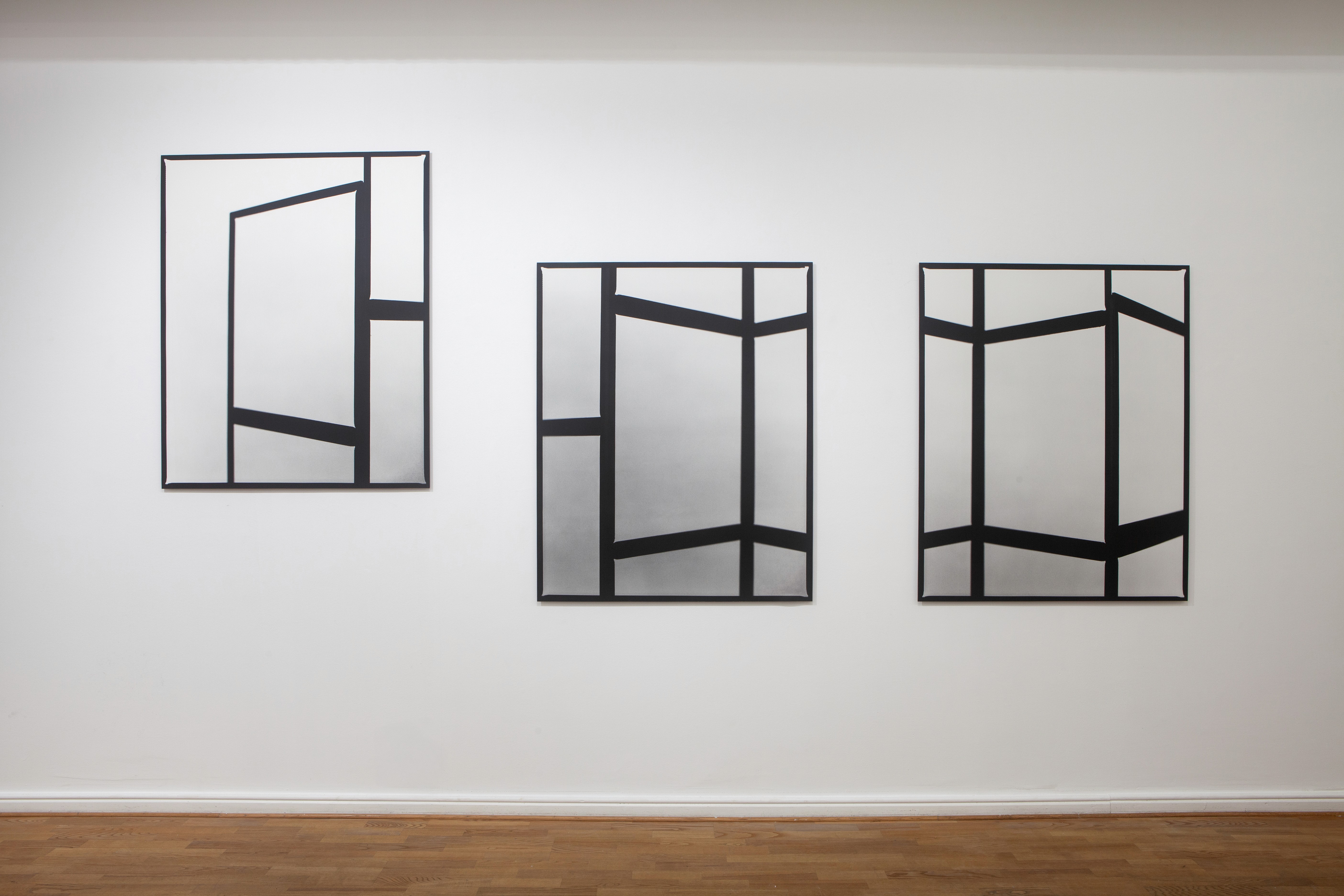
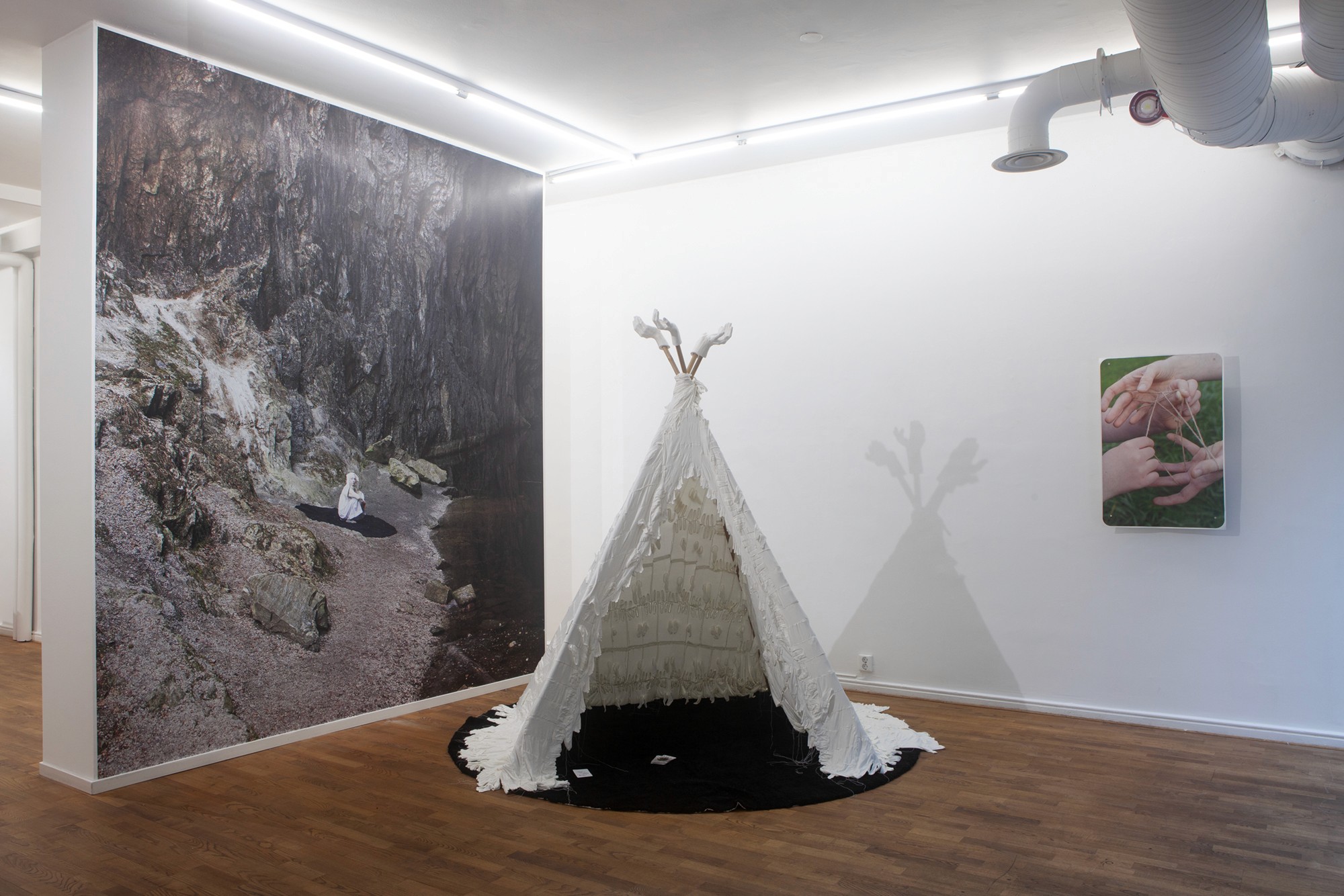
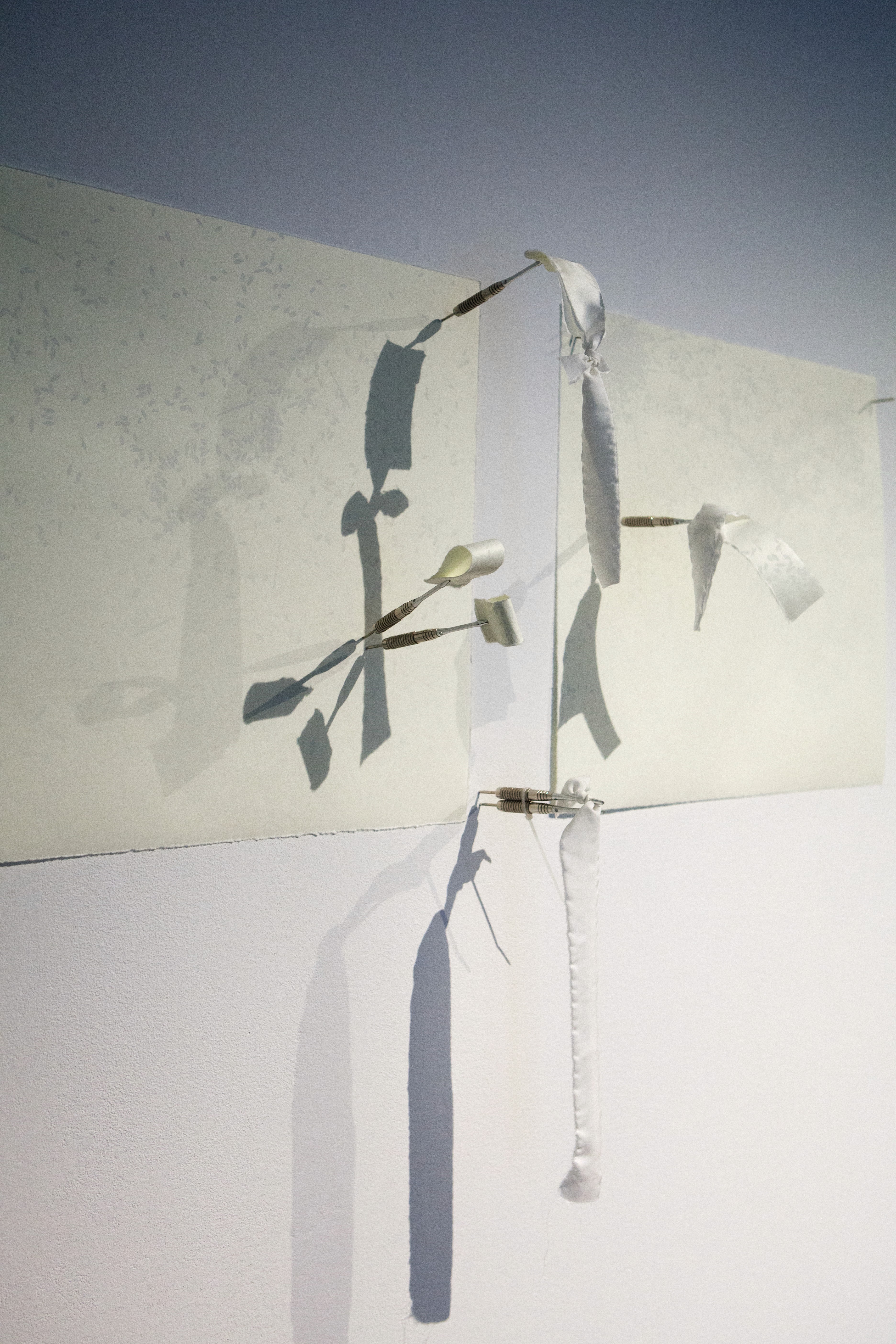
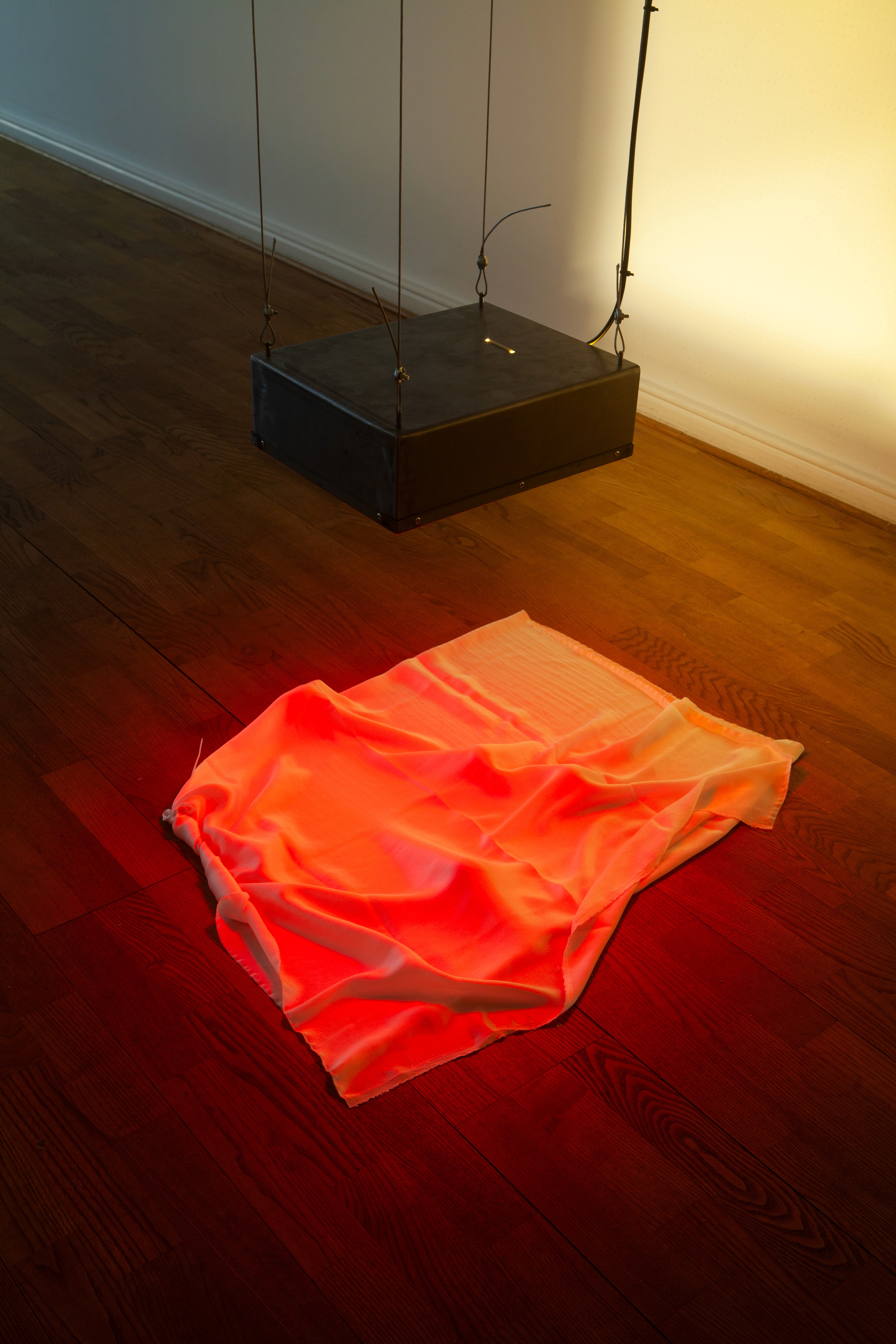
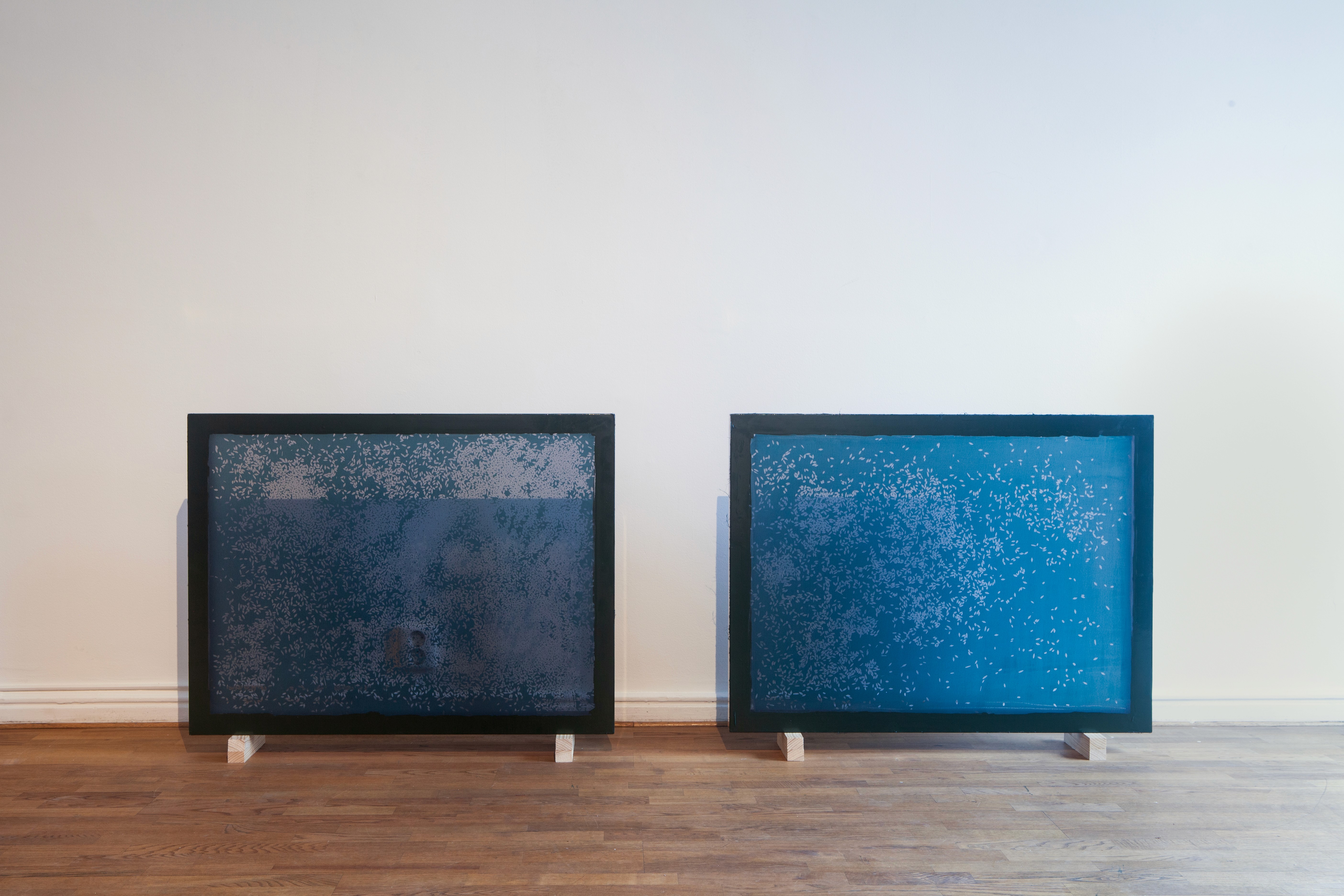
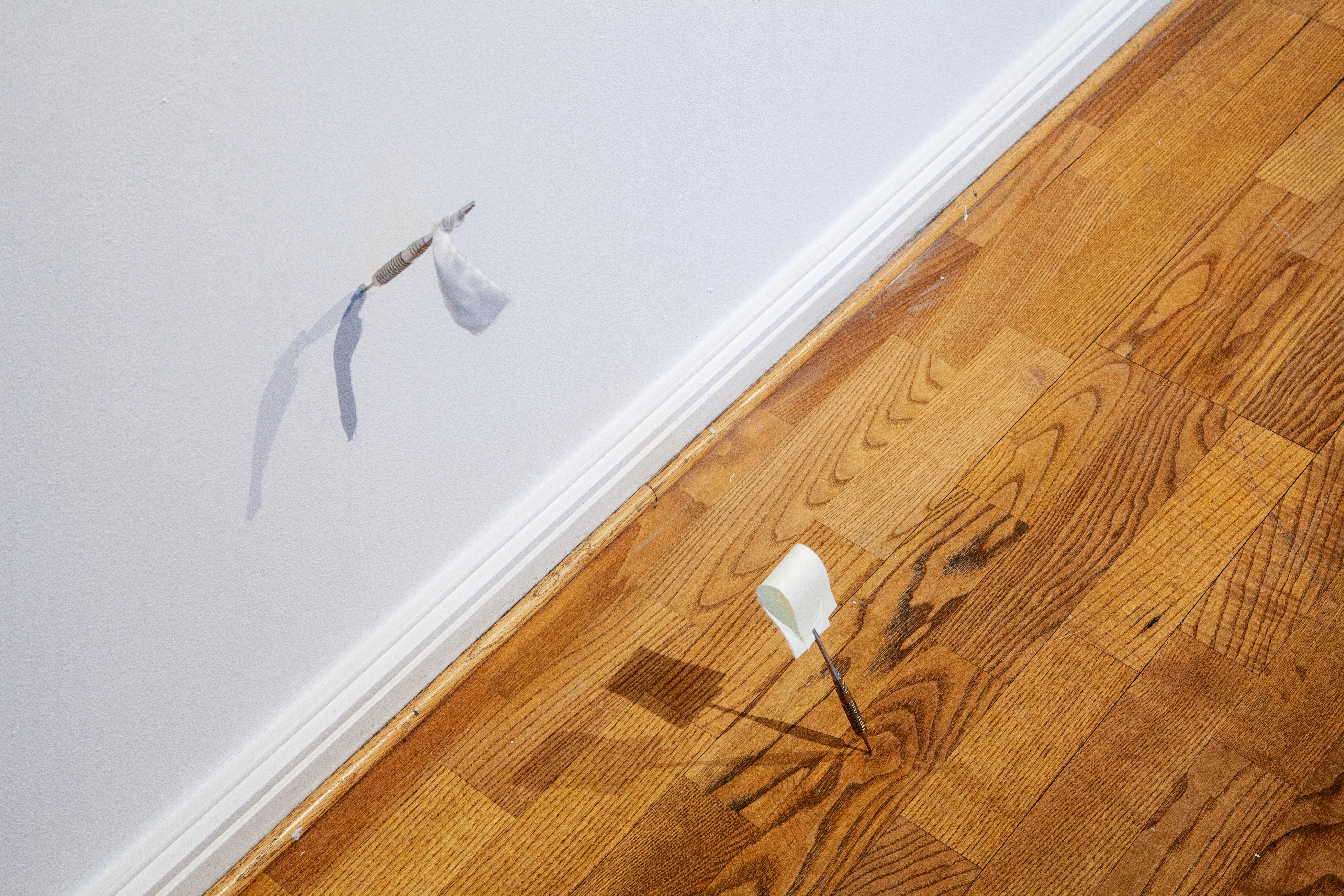
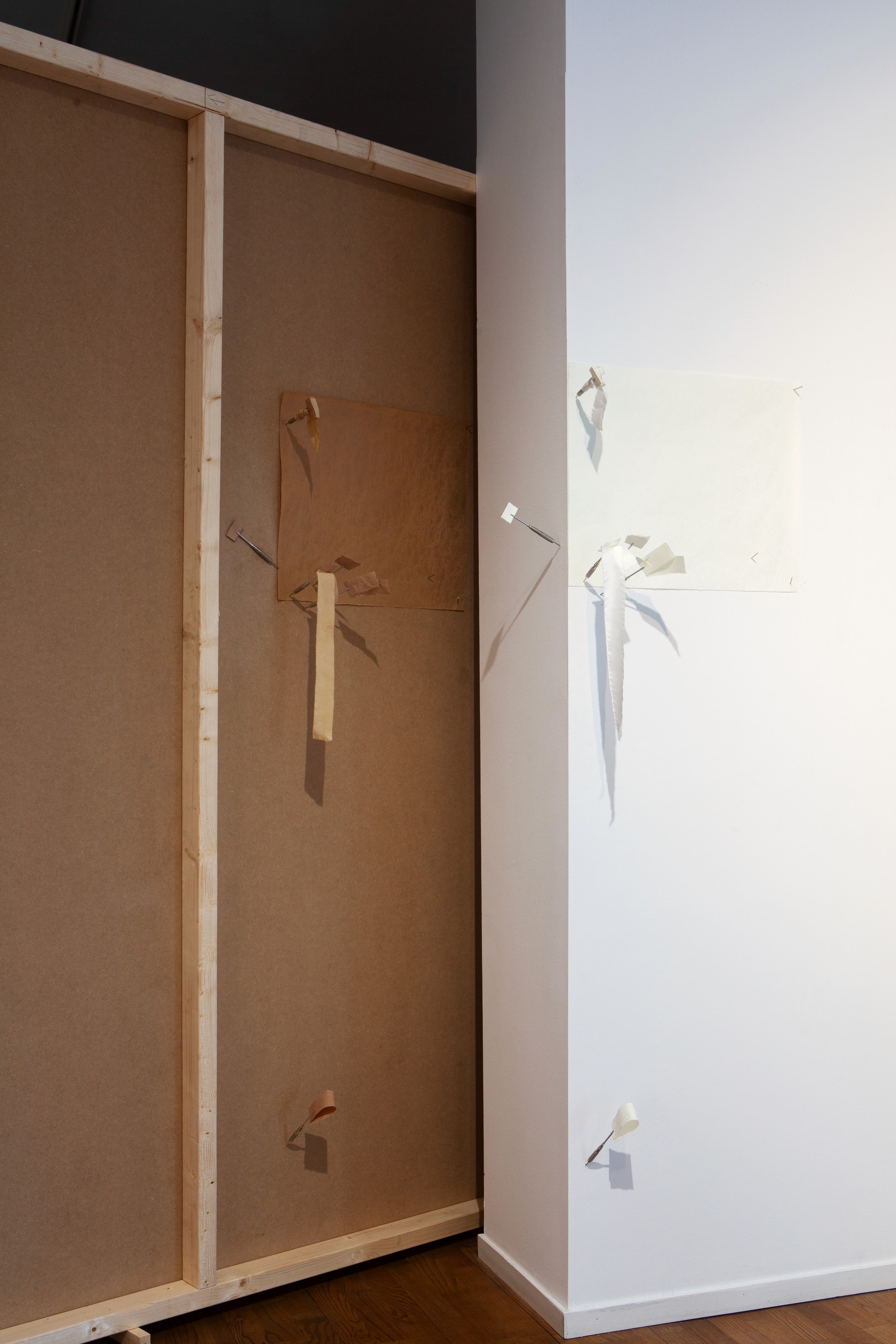
This exhibition is the result of a one-year iterative process that has moved between filmed and generated material, the photograph and its mutant—exchanging the shade of blackberry bushes and the light of the monitor. I’ve been coating and clearings screens, writing, assembling, staging [prompting]. Embedded in the outputs are crossings of the domesticated and wild, of control and chance. Attempting to keep my material in motion: peck peck—an arrow flies with human intervention [tail like a rooster], but it could also be a pen, or in this case, a nail to the wall. A note reads: “Throw them in the blender”. This message from myself to myself concerns the production of the sculptural and printed works, but resonates with how entropy and Markov chains* have shaped the collaborations with Gabriele de Seta. It has been my ambition for this show to present morphologies and copies spatially—where objects reappear and appropriate, renewed, but with residue [heritage]. Images are now being judged through belief/ disbelief, where belief itself perhaps can be considered as ‘animating’.
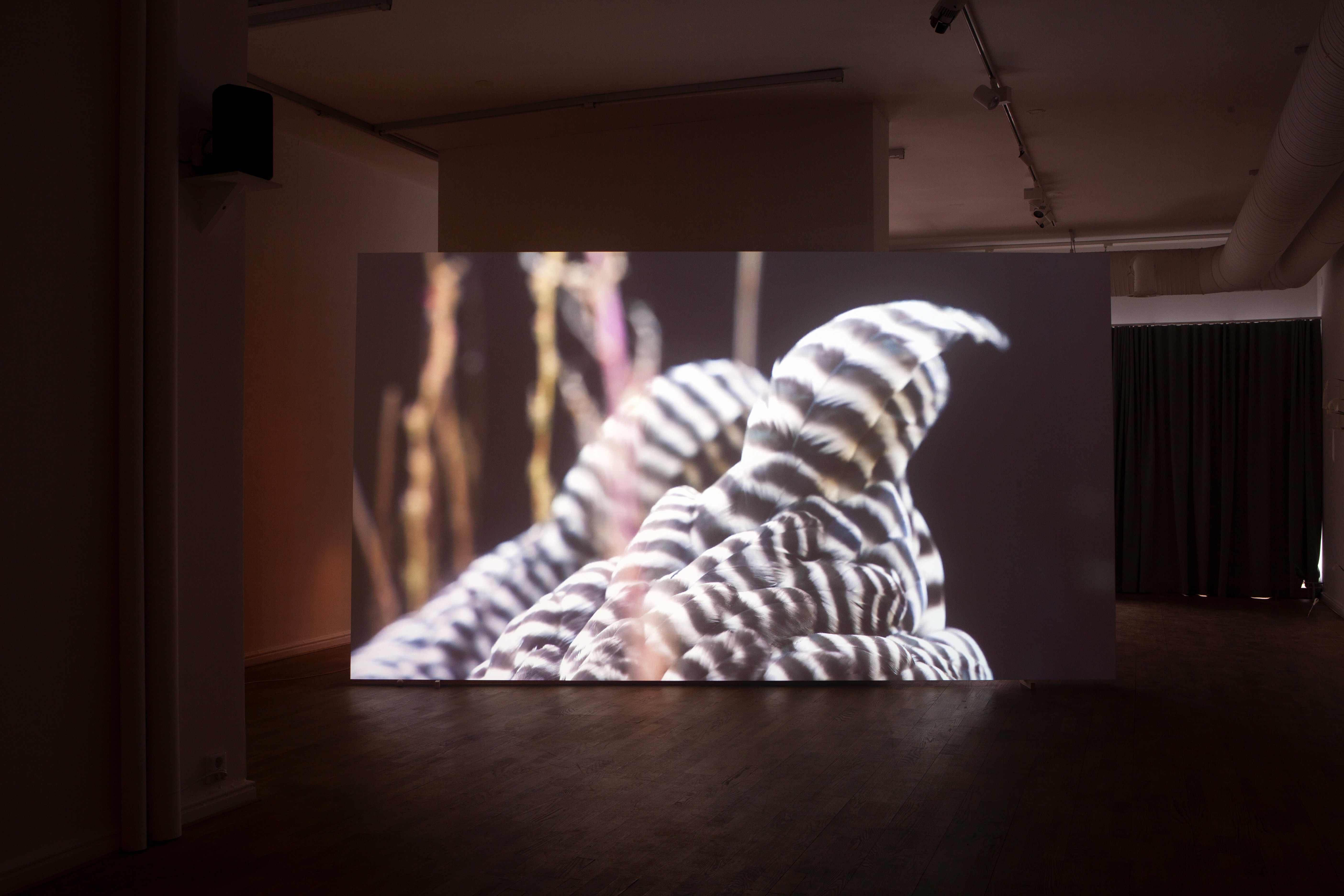
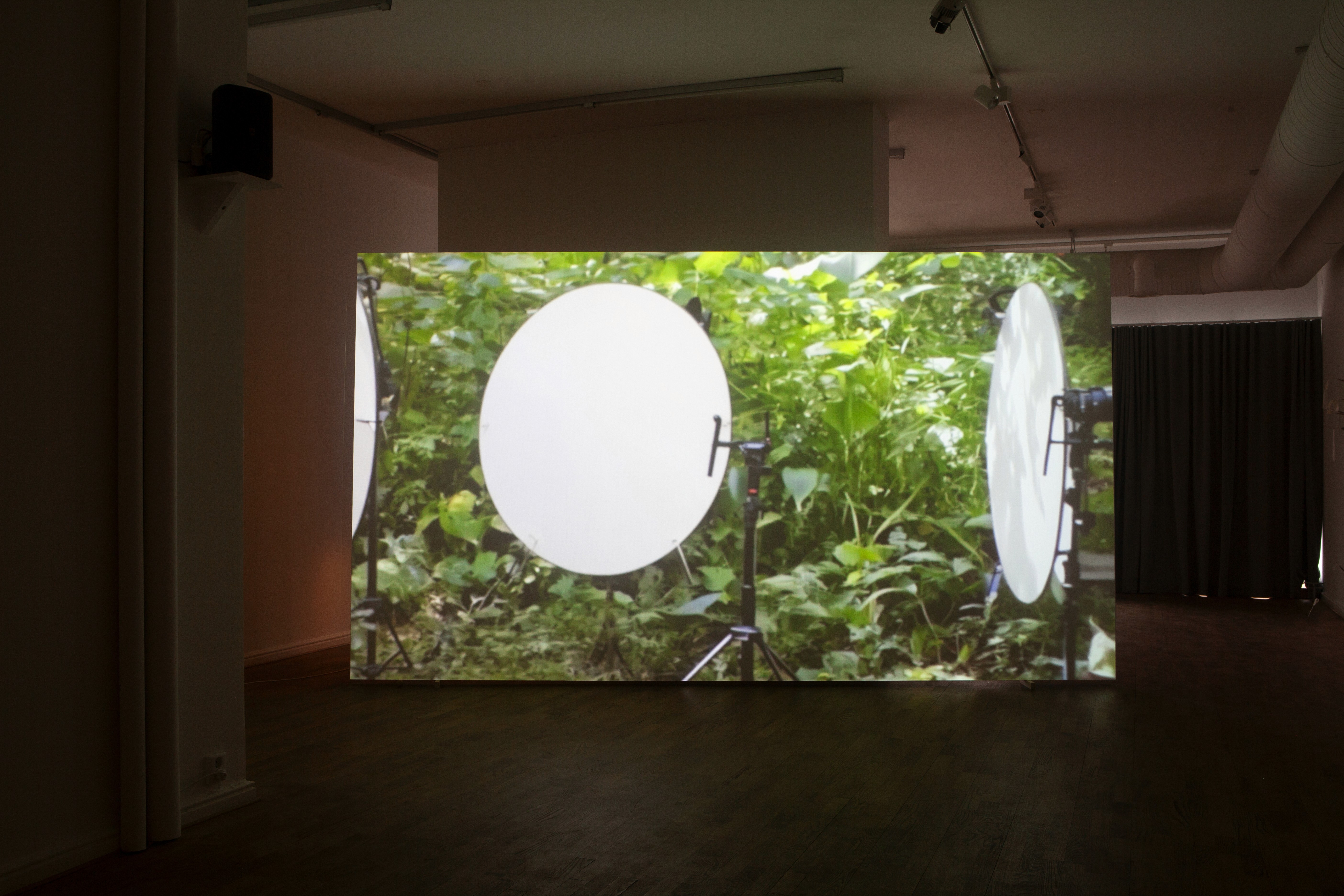
A diviner is someone who mediates between humans and God, a communicator. Diviner [A] and [B] originate in ideas on evolution and system: in the image, in nature, society and ideology – considering human intervention and violence, through the lens of technology. Using a domestic, bred bird as the primary visual source, the black and white pattern present an aestheticised nature [manipulation]. Working with that image as model, the video formally reinforce dualism – using the rhythm of the metronome, the didactic voice of Charles Eames*** and the comparative view on screen– as a method to reveal its limit; the greys [grace] beyond the binary. Simplicity expels nuance [the spirit leaving], the on/off, black/white, stop/go; is a metric language and what is being overlooked in the measurable [totalitarianism], is complexity. [A] and [B] have been about sequence and [dis]order. At first there was a book, then a video, then the objects and prints. False. At first, I had the pick up with D, buying number [89] and [91] from the old man who was breeding birds for beauty contests [flowers]. At first, I considered Dalmatians, often observing a specific one, wearing a neon green sock on the right front paw [index]. Being walked by its human at night the sock would glow slightly. For reasons unknown to me, the idea of dogs was dismissed – maybe in favour of the metaphor offered by the chicken coop [society]. That which remains unfixed, or without form, is not necessarily lost – it infuses somewhere else, shape-shifts or holds up space [cache].
Working with generated imagery, I’ve found, less ‘spirit’ than when filming, not necessarily gone, but somehow restricted within the boundaries of visuality; a specific sort of entrapment [immobility]. At the same time, the generated offers something interesting from the vantage point of fiction and cinema – as it prompts for the photograph to reproduce its own language, it becomes a reflection inward [a medium looking back at itself].
* In probability theory and statistics, a Markov chain or Markov process is a stochastic process describing a sequence of possible events in which the probability of each event depends only on the state attained in the previous event. Informally, this may be thought of as, “What happens next depends only on the state of affairs now.” (Wikipedia)
** Ray and Charles Eames's film A Communications Primer, produced in 1953, addresses the subject of code and communication. It refers to binary systems and early computing, while also engaging with information and social communication in broader terms. Parts of this work are included in the video Diviner [B]
Credit