World Making Machine brings together Erik Berglin, Ash Garwood and Evan Roth—three artists whose practices intersect at the crossroads of the lens, programming, and the photographic image.
Info
World Making Machine brings together Erik Berglin, Ash Garwood and Evan Roth—three artists whose practices intersect at the crossroads of the lens, programming, and the photographic image.
It’s hard to overstate the importance of photography—as a tool in science, a means of preserving memory and documenting history, and as a vehicle for personal and artistic expression. From the invention of the camera, photography has been a fundamental way of understanding nature and the world around us. Yet from the beginning, it has also been a kind of magical box—literally and poetically a Camera Obscura—that blurs the boundaries between the natural and the constructed, confronting the documentary, the scientific, and the fictional head-on.
In the digital age, where the alchemy of silver has given way to the transmutation of light into ones and zeros, this blurring of boundaries is more relevant than ever. With “AI photography” and “AI painting” becoming increasingly common, our digital literacy has become essential—while the aesthetics of photography and photorealism gain renewed significance.
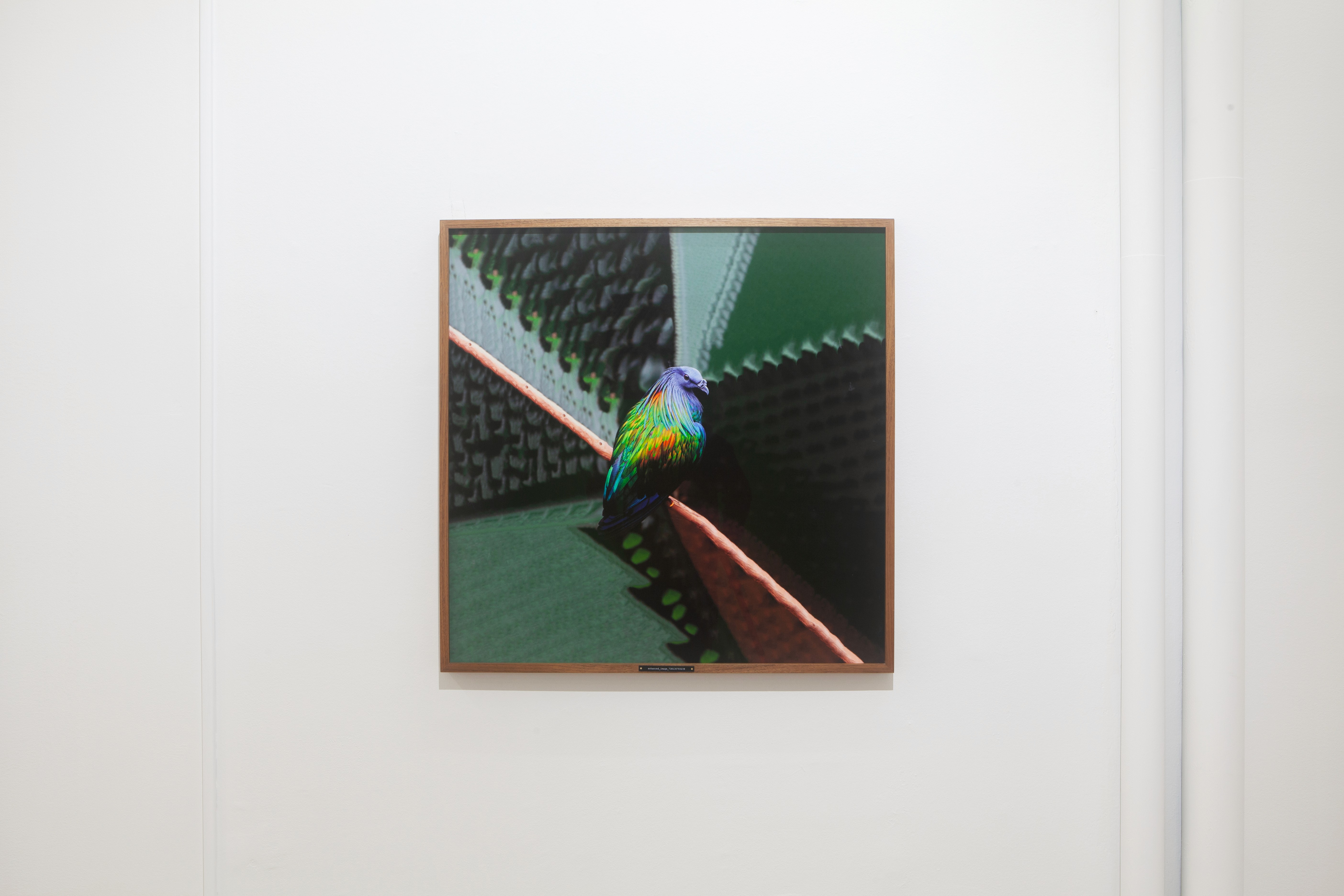
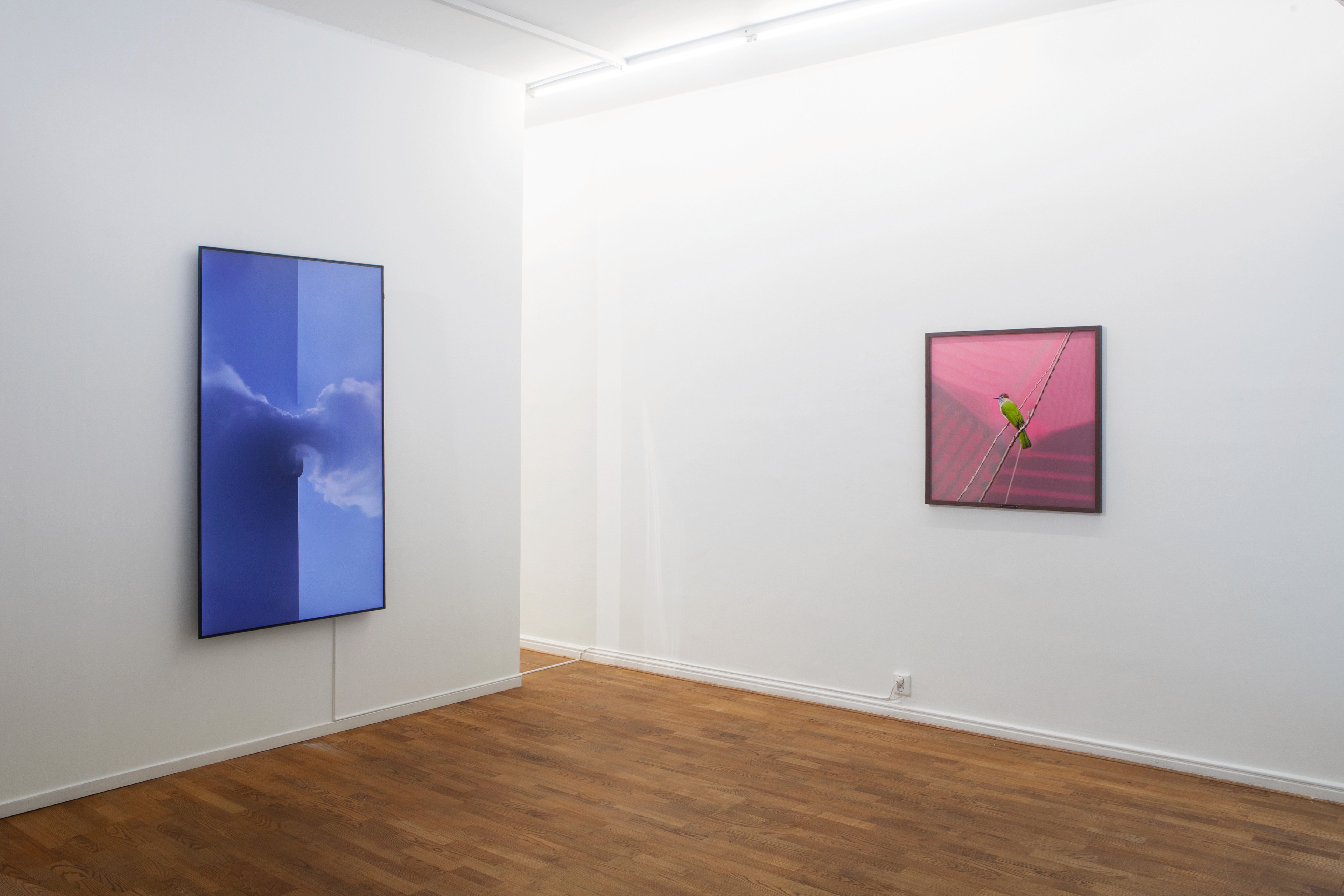
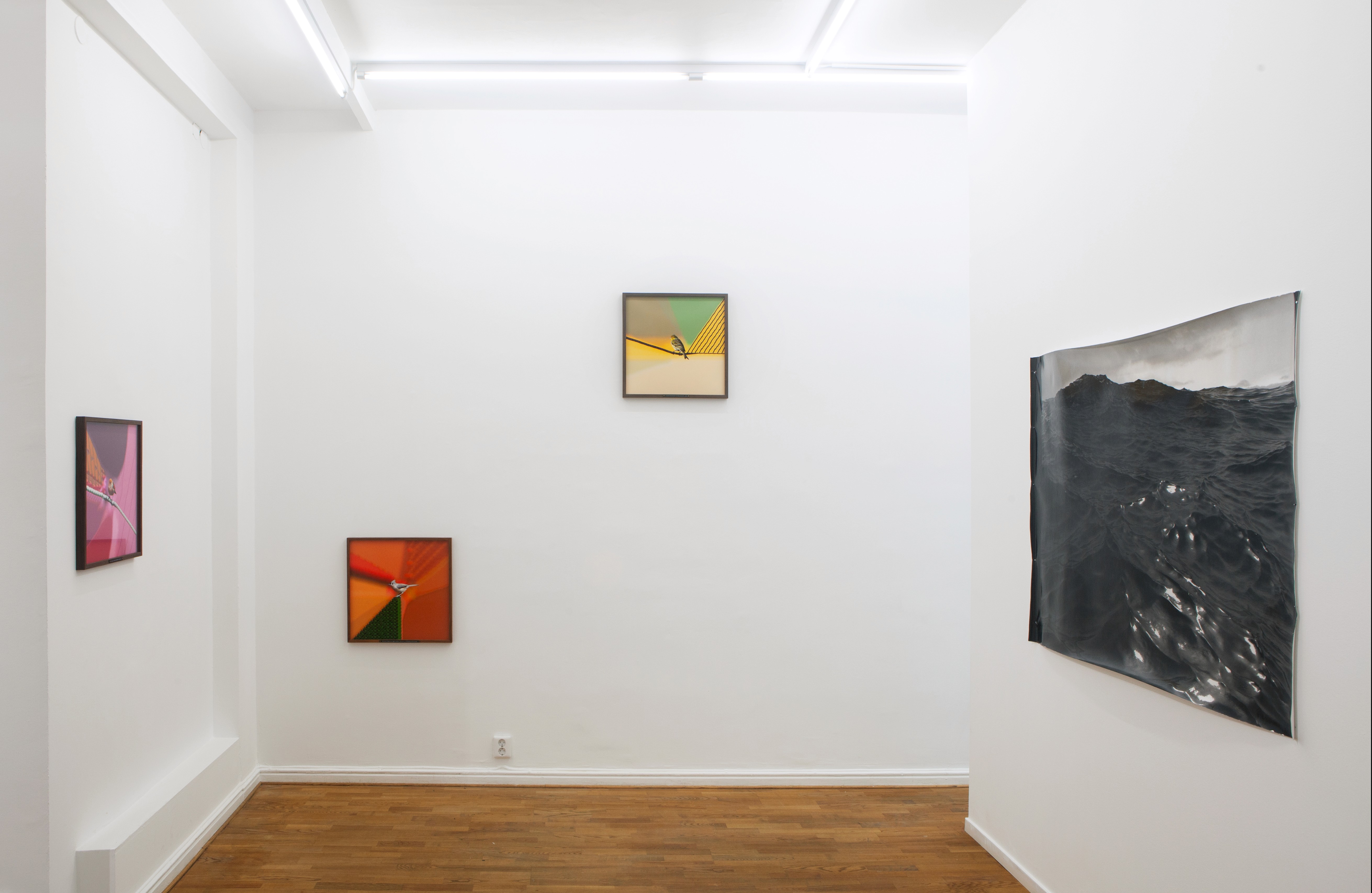
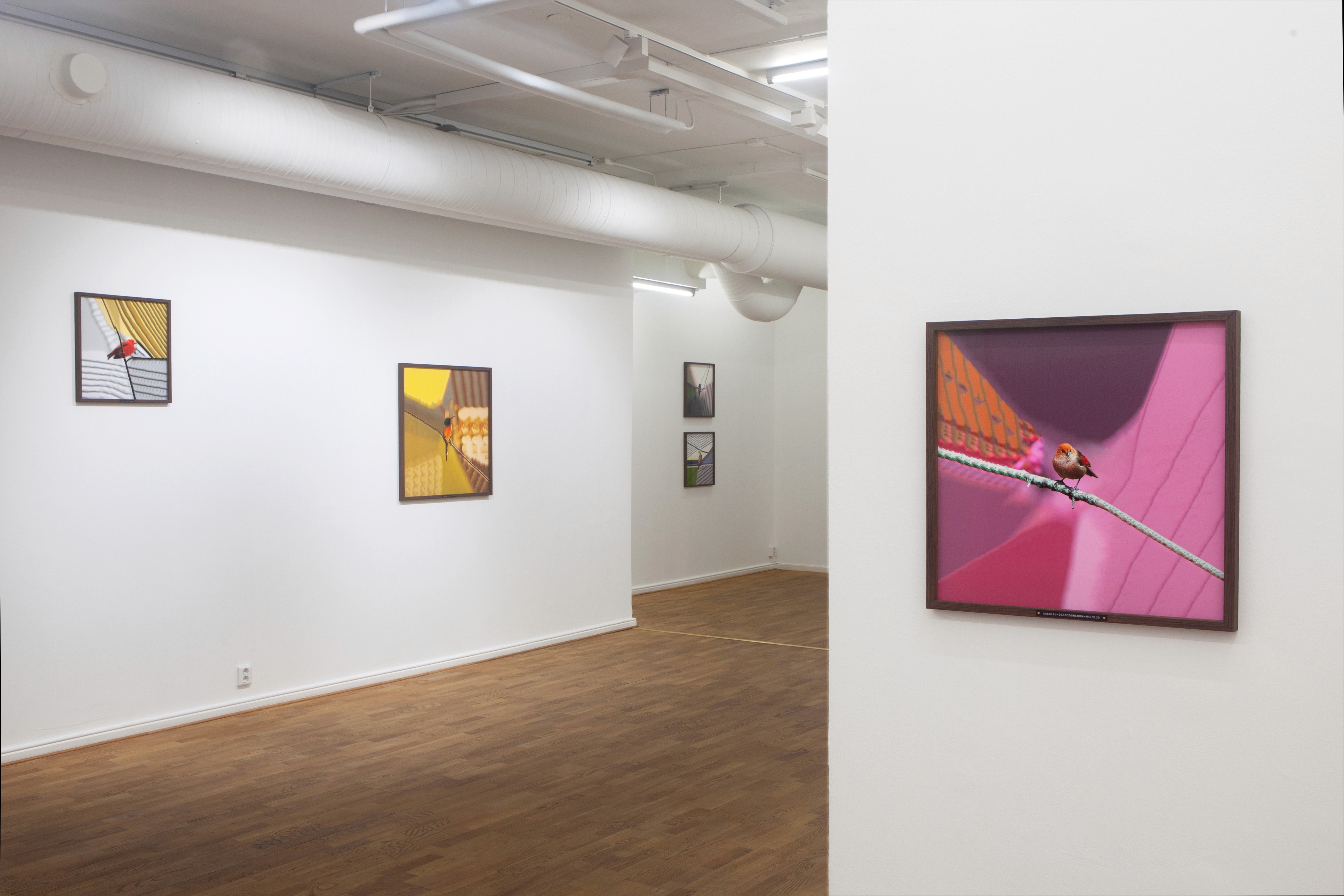
Erik Berglin calls his series of colourful birds Ignavus Auspex, a tongue-in-cheek title that translates from Latin as “lazy birdwatcher.” It’s a self-aware label, since Berglin doesn’t find his birds in the wild, as a traditional ornithologist might, but through obsessive digital searching. Yet in our screen-saturated era, perhaps the title is aimed at us too—aren’t we all “lazy birdwatchers”?
To expand his collection, Berglin uses Latin species names to search ornithological databases. These Latin terms, functioning like image prompts, yield high-resolution versions of the stock images typically used to describe bird species.
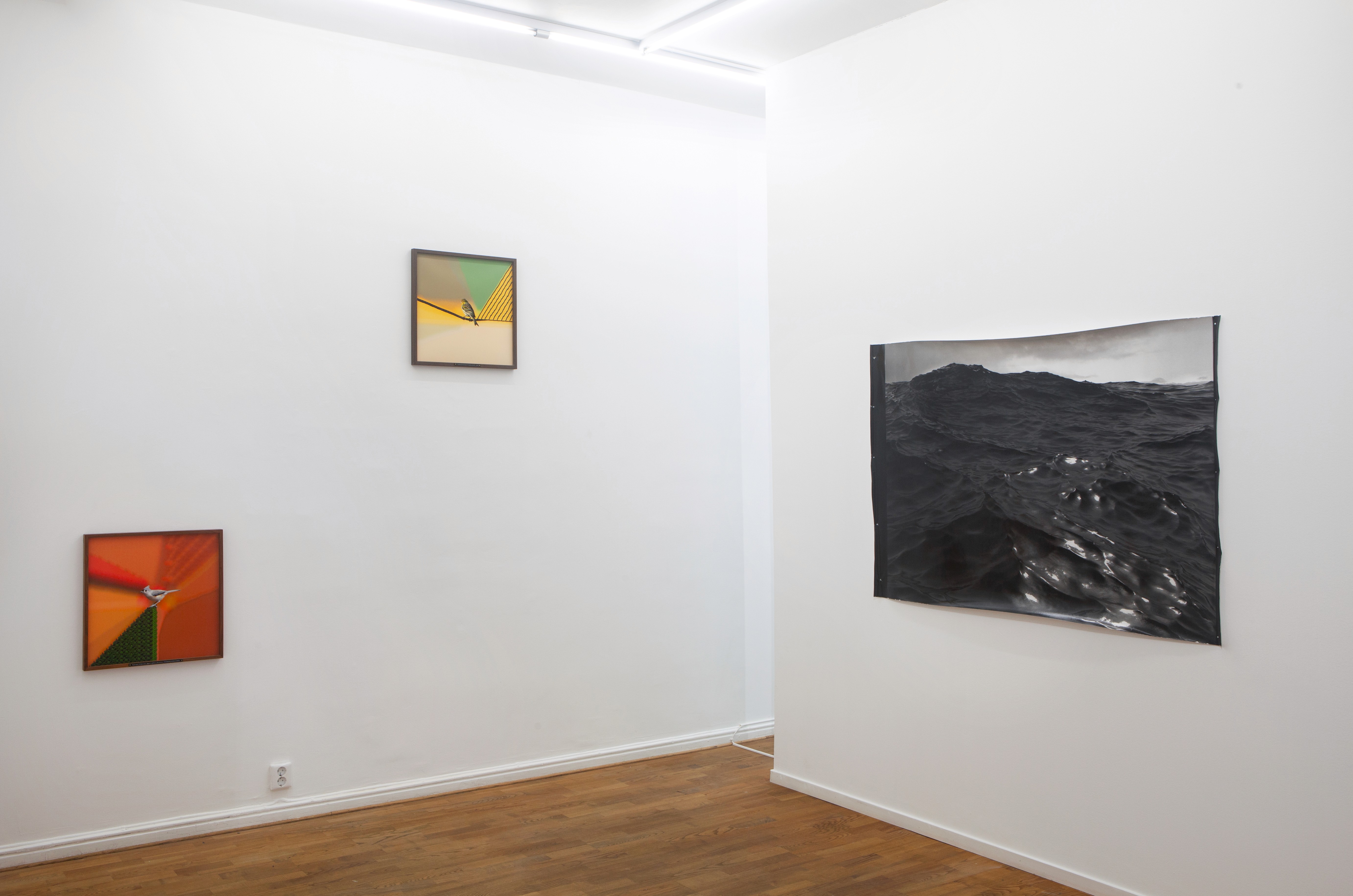
At first glance, the works appear to be conventional bird portraits set in natural habitats. But on closer inspection, their surroundings feel wrong. Using algorithms to analyse and extrapolate from the original images, Berglin enlarges them—creating artificial landscapes of colour and shape that surround the birds. He’s interested in the algorithm’s assumptions: how it decides which pixels to add to make a “believable” image. Berglin retains the original file names, allowing viewers to Google the titles and compare the altered and original versions— inviting us into his game of digital-age ornithology.
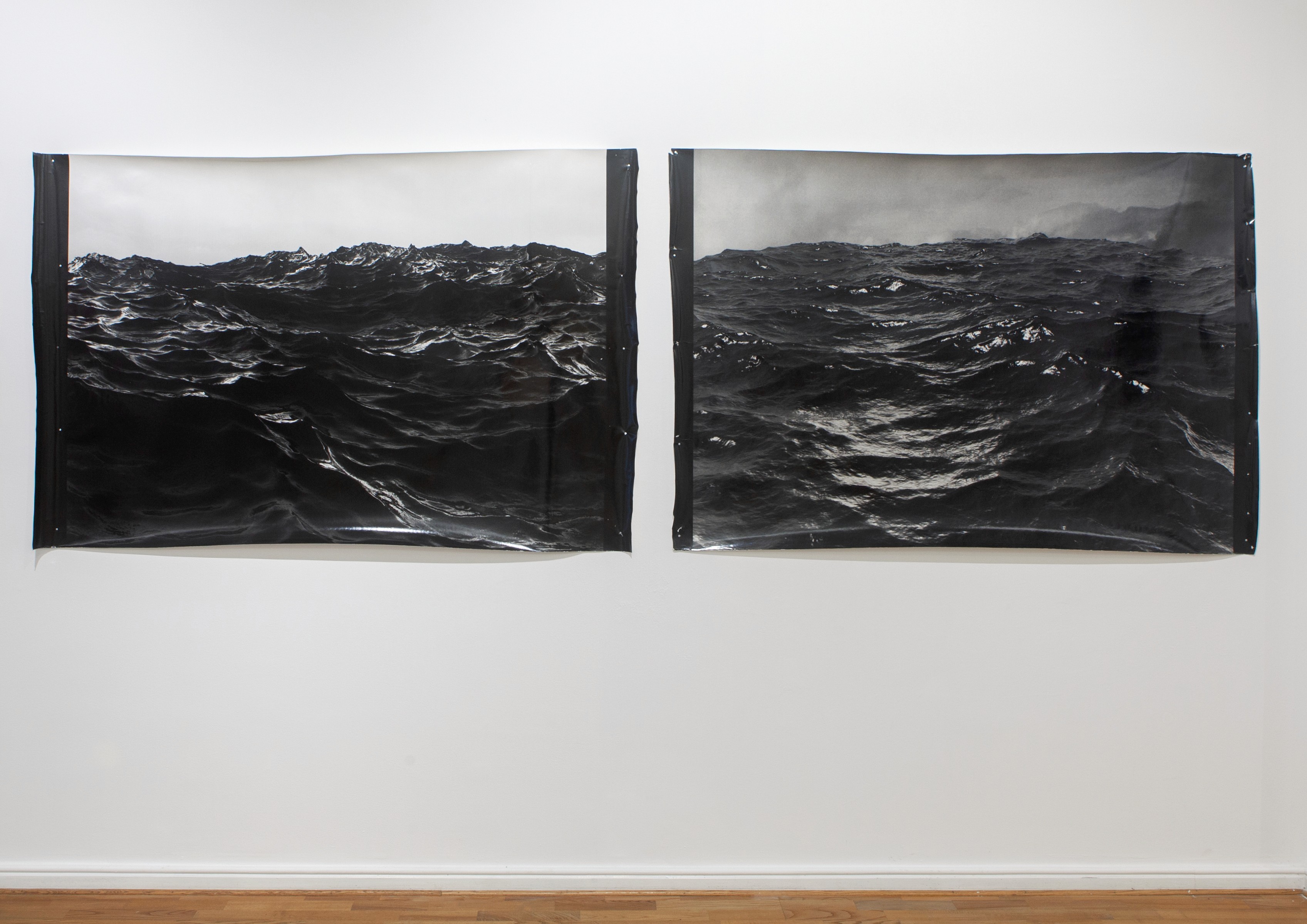
In Ash Garwood’s work, water is both subject and metaphor. Her Equivalence series at first appears to be black-and-white seascapes that echo the romantic and sublime imagery of German Romanticism and traditional landscape photography. At first glance, they are entirely convincing—until pixels, polygons, and digital glitches betray their artificial origins.
In reality, each image has been constructed entirely in 3D software, then transitioned into the analogue darkroom, where Garwood hand-prints them as silver gelatin photographs. This process places computer- generated landscapes in direct material dialogue with photographic tradition and art history.
Unlike digital screen images, fibre-based photographic paper has a “memory”: it resists being flattened once curled, asserting its objecthood. Ash embraces this quality by shipping the prints rolled from her studio in Sydney and opting not to frame them. Instead, they are roughly nailed to the gallery walls, their surfaces buckling and bowing like stormy seas.
Equivalence explores how artificial world-building intersects with the history of landscape depiction in photography and art. As Garwood puts it:
“How can a queer, eco-fictive perspective utilise the tropes of landscape, the sublime and grandeur to create images that bring together fiction and fact as necessary components in how we understand our environment through images?”
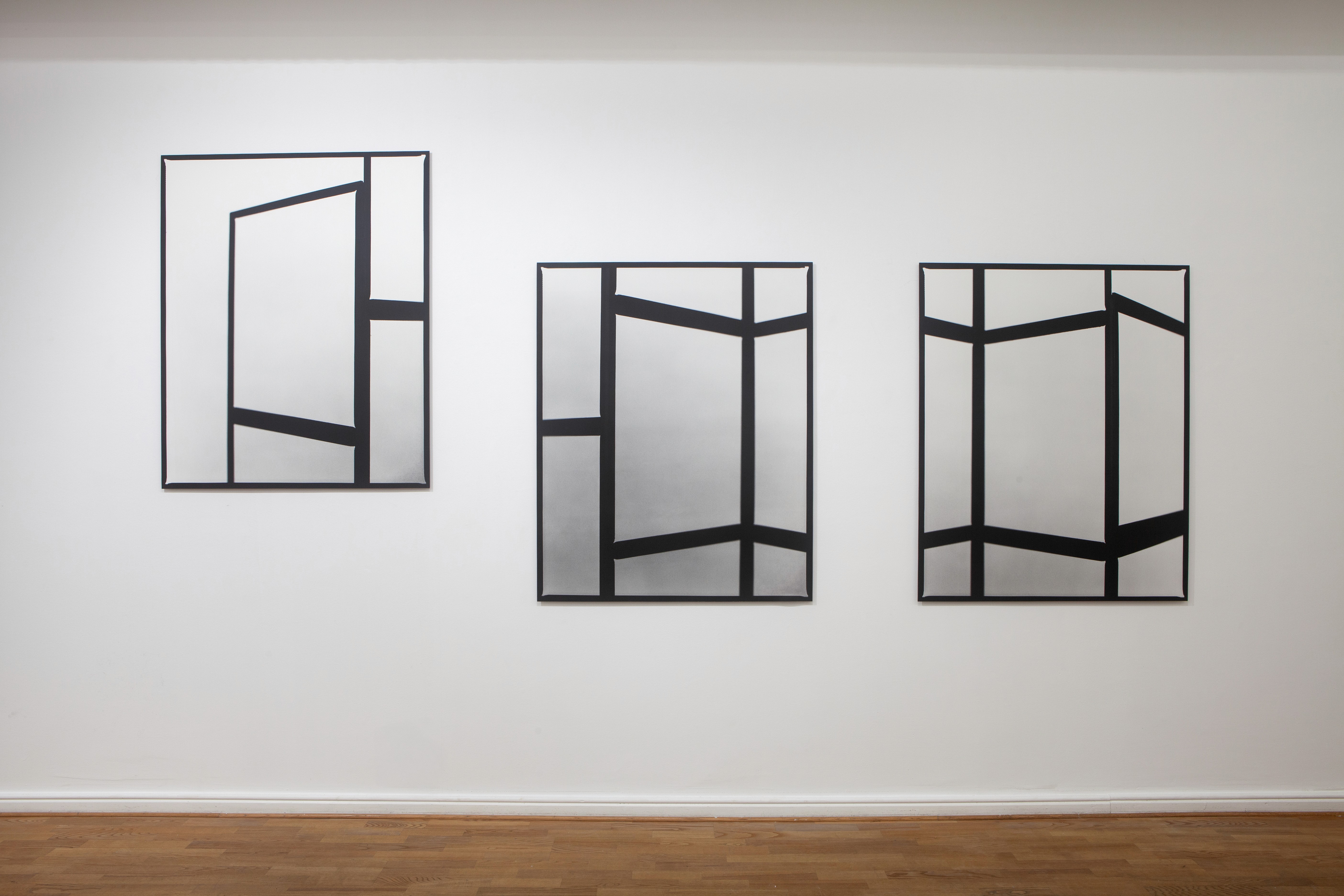
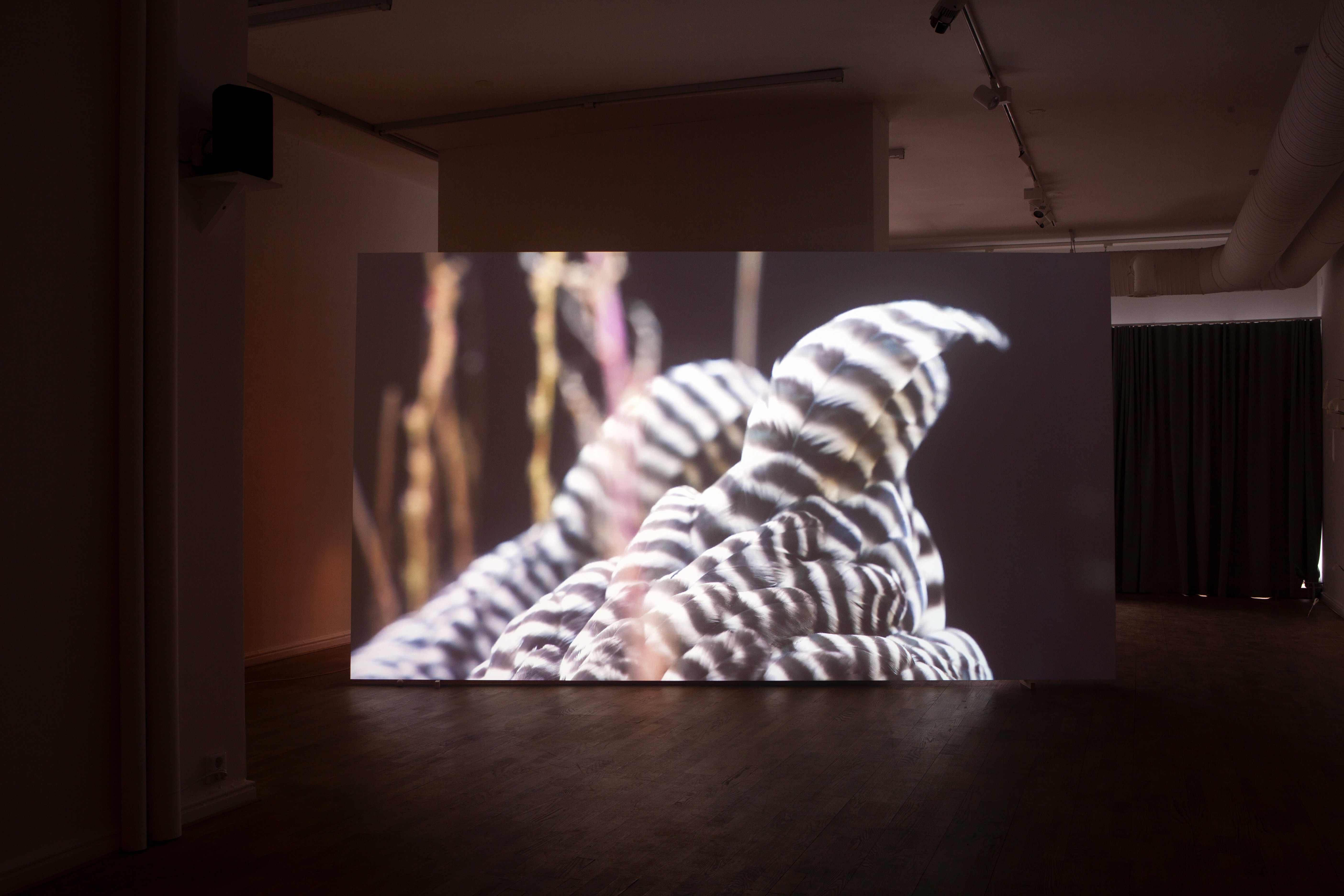
In Evan Roth’s Skyscapes, we encounter photographs of the sky as they warp and bend across vertical screens, reshaped by Roth’s programming into unnatural forms. Despite the futuristic feel, Roth employs ancient mapping projections—some dating back to 150 AD—to animate these otherwise static frames.
The project began during a Berlin winter, when Roth began photographing the sky on rare clear days, seeking solace from seasonal gloom. This ritual led him to consider the impact of nature on well-being and the implicit messages of ownership, identity, and ideology embedded in idealized images of nature. Skyscapes addresses themes of access, public space, health, power, and who gets to enjoy an unobstructed view of the sky in an urban environment.
Mapping projections—techniques for transforming the globe’s curved surface into a flat representation—are central to this work. They are not neutral tools; they shape how we see the world and are imbued with bias and ideology. Asking “Who made the map?” or “What lies at its center?” often leads to the same answer. In
Skyscapes, the centre might just be you—like the dot on a map that says “you are here”—as reimagined skies twist and unfold around you.
The works of Erik Berglin, Ash Garwood and Evan Roth invite us to reflect on photography’s power to represent the world. They ask us to question what is real, natural, or authentic—and to find beauty in the artificial, and artificiality in the beautiful.
Credit